Who Pays for a Fence Between Neighbors in Washington? The Short Answer
If you are planning a fence and wondering who pays for a fence between neighbors in Washington, the short answer is: there is no statewide law that forces a neighbor to split the bill. Washington is what is often called a 'no-fault' fence state. Unless a local ordinance, a homeowners association rule, or a written agreement says otherwise, the person who wants the fence is generally the person who pays for it. That surprises a lot of homeowners, especially those who grew up in states where boundary fences are shared by default.
The practical result is that most fence projects in Spokane are paid for by one property owner. That owner may choose to build entirely on their own side of the property line, which keeps things simple and avoids any claim that the neighbor co-owns the structure. If the fence sits right on the line, both properties technically benefit, but the financial obligation still rests with whoever ordered the work unless the neighbor voluntarily agrees to contribute. Understanding this upfront prevents the awkward conversation that happens after the posts are already in the ground.
What Washington Law Actually Says About Fence on Property Line Disputes
Washington does not have a general statute requiring adjacent landowners to share fence costs for residential privacy fences. There are narrow exceptions, such as certain agricultural or livestock fencing rules, but those rarely apply to a typical backyard privacy fence in a suburban neighborhood. Local city and county codes can add their own requirements, particularly around height limits, setback rules, and permits, so it is always worth checking with the planning department before you build. The key takeaway is that state law leaves cost sharing to private agreement, not government mandate.
That means a neighbor fence law question in Washington usually comes down to property rights and civil agreements rather than a mandated split. If a fence is built entirely on your property, it is yours, and you control its style, height, and maintenance. If it straddles the line, you and your neighbor both have an interest in it, which is why many homeowners prefer to keep the structure clearly on one side. A professional installer can help you locate the line accurately and recommend placement that protects your investment and reduces friction. For homeowners comparing options, our Wood & Privacy Fence Installation team can walk you through boundary-friendly designs.
The Good Neighbor Fence: A Voluntary Cost-Sharing Approach
A good neighbor fence is not a legal term in Washington, but it describes a practical arrangement many homeowners choose. In this setup, two neighbors agree to share the cost of a boundary fence, often splitting it evenly, and both benefit from the privacy and security it provides. This works best when both parties are on good terms, agree on the design and height, and put the understanding in writing. A simple one-page agreement covering cost, placement, maintenance, and what happens if one party moves is enough to prevent most future disputes.
The good neighbor approach is especially popular for privacy fencing because the finished look is consistent from both sides. Some designs, often called 'good neighbor' style, alternate board placement so each side presents a finished face rather than exposed framing. If you are considering this route in Spokane Valley, it helps to bring a clear proposal to your neighbor rather than an open-ended request. Show them the design, the pricing, and the proposed placement, and ask for a decision in writing. Neighbors are far more likely to say yes when the ask is specific and fair.
Wood & Privacy Fence Installation Near Me: When to Call a Pro
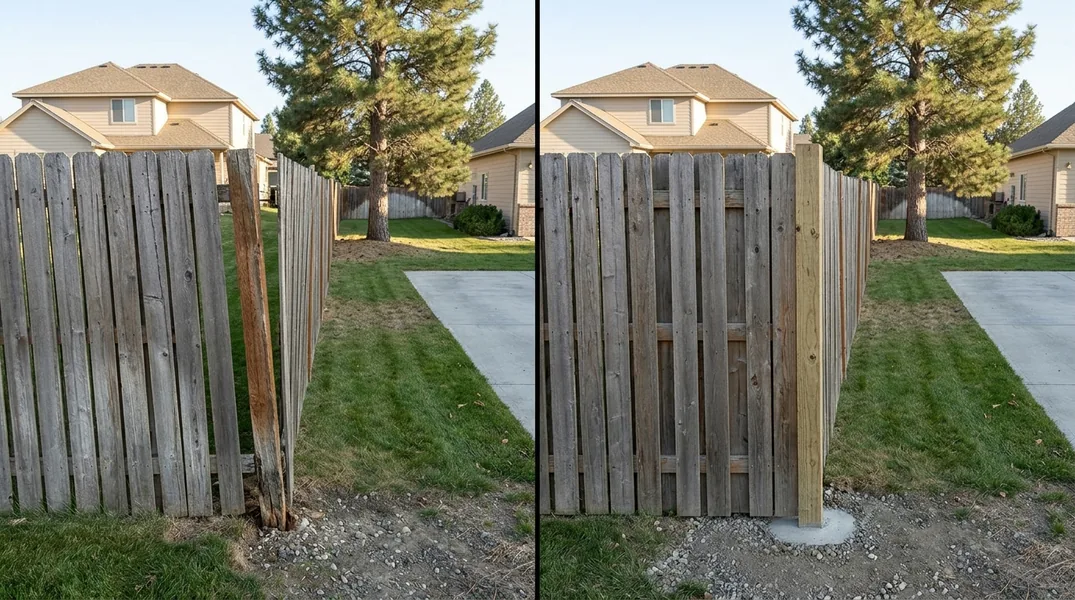
Once you have settled the payment question with your neighbor, the next step is getting the fence built correctly. Boundary work is not a good place for guesswork. A professional installer will verify the property line, check local height and setback rules, and set posts to the correct depth for our freeze-thaw cycles. Poorly set posts are the most common reason fences lean or fail within a few years, and that is a costly mistake to repeat. If you are searching for wood and privacy fence installation near me, look for a local crew that knows the terrain and the permitting landscape.
Spokane Fence handles boundary-friendly designs every week, from simple side-yard privacy runs to full backyard enclosures. We can also help you document placement so there is no confusion later about whose fence it is. If you want a clean, professionally installed fence without the neighbor drama, call (509) 352-1315 or request a free estimate and we will walk the property with you.
When Neighbors Disagree: Practical Steps Before It Escalates
Not every neighbor will want to share costs, and some may object to a fence entirely. In Washington, you generally have the right to build a fence on your own property as long as it meets local code, so a neighbor's objection does not usually stop the project. However, building right on the line without agreement can invite a boundary dispute or a claim of encroachment. The safest path is to keep the fence a few inches inside your own line and document the placement with a survey if there is any doubt. A survey is a small cost compared to a legal fight.
If a neighbor claims the fence is on their land, or if you discover an existing fence is actually over the line, handle it calmly and in writing. Talk through options such as a boundary line agreement or a small adjustment in placement. Most disputes in Liberty Lake and across the region resolve quickly when both parties have clear information. If the situation is genuinely contested, a real estate attorney can advise you, but for most homeowners a polite conversation and a written agreement are enough. Our team can help you choose a placement that respects the line and keeps the peace.
Fence Cost in Spokane: What to Budget and How to Split It
If you and your neighbor decide to share a boundary fence, it helps to know what the numbers look like before you talk. Wood privacy fencing is the most common choice locally, and installed costs vary with height, material grade, gate count, and site conditions such as slope or rocky soil. A typical residential run is priced per linear foot, so a straightforward backyard project is easier to budget than a long, gated, or terraced one. Getting a written quote first gives both neighbors the same starting point and removes the guesswork from the conversation.
When splitting costs, decide upfront how you will handle gates, stain or seal, and future repairs. A common approach is a 50/50 split on the shared run, with each owner paying separately for any gates that serve only their yard. Put the agreement in writing and keep a copy with your home records. If you are ready to price your project, our team serves Cheney and the surrounding area, and we are happy to provide a detailed free estimate you can share with your neighbor. Call (509) 352-1315 to get started.
Looking for a professional fence contractor in Spokane? Spokane Fence responds fast for all your fence needs.
Get a Free Quote