Why So Many Fences in Spokane End Up Leaning
If you drive through almost any neighborhood in Spokane, you will spot at least a few fences that look like they have had a long night. Posts tilt, panels sag, and gates that once closed with a satisfying click now drag along the ground. It is tempting to blame shoddy workmanship, but the real story is usually the ground beneath the fence. Spokane sits in a region with a distinct combination of seasonal freeze and thaw cycles, rocky glacial soil, and wet winters, and all three of those forces work against fence posts over time.
The good news is that a leaning fence is rarely a lost cause. In most cases, the fix comes down to understanding what moved the post in the first place and correcting the installation so it stays put. Homeowners who catch the problem early can often avoid a full replacement. If you are already seeing posts out of plumb, a professional assessment is the fastest way to know whether you need simple free estimate style repairs or a more involved rebuild.
Frost Heave and Fence Post Repair: What Actually Happens Underground
Frost heave is the single most common reason fences lean in colder climates, and it is worth understanding because it explains so much of what you see above ground. When soil freezes, water inside it expands. That expansion pushes the ground upward, and anything embedded in that ground gets pushed along with it. In a Spokane winter, the freeze line can reach well below the surface, and if a fence post is set too shallow, the expanding soil grabs the bottom of the post and lifts it. When spring arrives and the ground thaws, the post settles back down, but rarely in the exact same position. Repeat that cycle for a few years and a post that started perfectly straight will slowly work its way out of plumb.
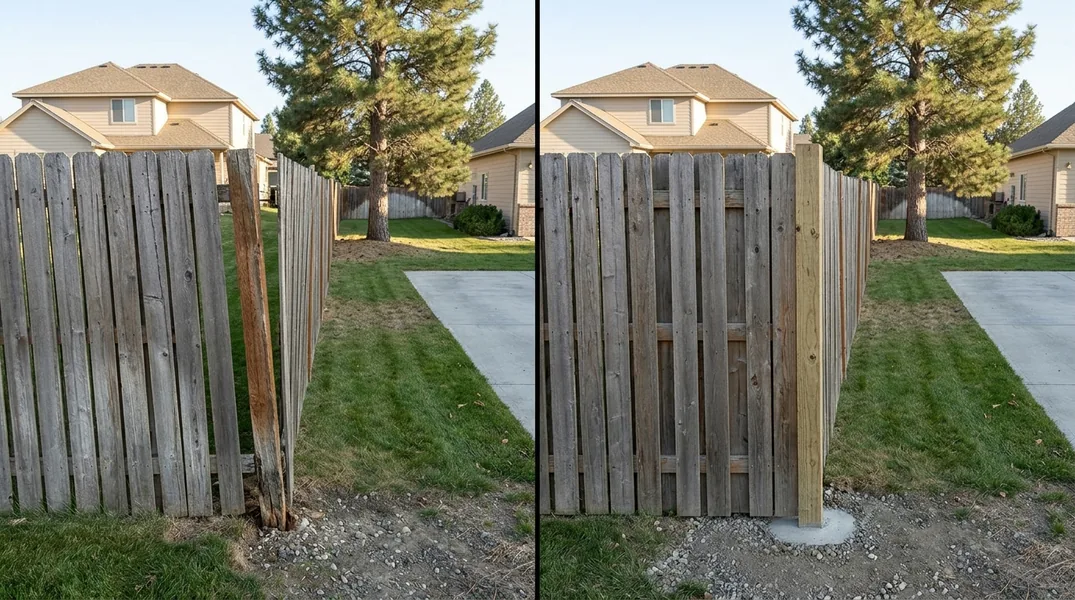
The right fix for frost heave fence posts is not simply to push the post back and hope for the best. A proper Wood & Privacy Fence Installation sets posts below the local frost depth, which gives the post a stable anchor that the surface soil cannot lift. When we repair a leaning post, we check the depth, the footing, and the drainage around it. Sometimes resetting the post with a deeper footing and better gravel base is enough. Other times the post itself has been compromised, and replacing it is the more durable choice.
Rocky Soil, Poor Drainage, and Rotted Fence Post Repair
Spokane soil is not exactly friendly to fence posts. Much of the area sits on glacial deposits that mix sand, gravel, and large rocks, which means digging a clean, consistent hole is often harder than it sounds. Contractors who rush the job may end up with a post that is not centered in its hole or not surrounded by properly compacted material. That leaves gaps where water collects, and standing water around a wood post is a direct path to rot. A rotted post loses its structural strength long before it looks obviously decayed on the outside, and once the base softens, the post begins to lean.
Rotted fence post repair starts with an honest inspection of the wood at and below the soil line. If the rot is limited to the top of the post, a repair splice can sometimes extend its life. If the rot reaches the footing, the post needs to be replaced, and the new post should be set with proper drainage so the problem does not return. This is also where the choice of material matters. Homeowners who want to avoid rot entirely often ask about Vinyl & PVC Fence Installation, which will not absorb water the way wood does. For wood fences, pressure-treated posts and a gravel base go a long way toward keeping the fence upright through many Spokane winters.
Leaning Fence Repair Near Me: When to Call a Professional
Some fence problems are genuinely DIY-friendly. A single loose gate hinge or a slightly wobbly panel can often be tightened or braced in an afternoon. But leaning fence repair near me is a different category of work, because the visible lean is usually a symptom of a footing problem that you cannot see from the surface. Pulling a post out of rocky Spokane soil, resetting it at the correct depth, and compacting the backfill properly takes the right tools and a fair amount of physical effort. Doing it halfway can leave you with the same lean again after the next freeze.
A professional crew also brings something homeowners often overlook: the ability to tell the difference between a post that can be saved and one that should be replaced. That judgment call saves money in both directions. You avoid paying for a full replacement when a targeted repair would do, and you avoid repeated patch jobs on a post that is never going to hold. If you are in Spokane Valley or Liberty Lake and your fence is starting to lean, a quick on-site look is usually enough to map out the fix. You can reach Spokane Fence at (509) 352-1315 to talk through what you are seeing.
The Right Fix for a Leaning Fence in Spokane
The right fix depends on what is actually wrong, which is why a one-size-fits-all answer rarely works. For a post lifted by frost heave, the solution is a deeper, better-anchored footing that reaches below the active freeze zone. For a post damaged by rot, the solution is replacement with a properly drained footing. For a fence that has simply aged and shifted over many seasons, a partial rebuild of the worst sections can restore a straight line without the cost of starting over. In every case, the goal is the same: give the post a stable base that will not move when the ground does.
It also helps to think about the long term when you repair. If your current fence is nearing the end of its life, repairing one or two posts may only buy a season or two. In that situation, putting the repair money toward a new fence is often the smarter investment. The same logic applies to material choice. A wood fence suits many Spokane yards beautifully, but if your property has drainage issues that are hard to correct, a material that does not rot may be the more practical route. Homeowners comparing options for a new build or a major repair can review current pricing to see how the numbers stack up before deciding.
Keeping Your Fence Straight Through Spokane Winters
Prevention is mostly about water and depth. Make sure the ground around each post slopes away from the fence so water does not pool at the base. Keep soil from piling up against the wood, since that holds moisture where rot starts. If you have a sprinkler system, check that it is not soaking the fence line on a regular basis. These small habits add years to a fence, and they cost nothing but a little attention each season.
When it is time for a repair or a new fence, working with a local crew matters more than most homeowners realize. A company that installs fences in Cheney and across the Spokane area knows how deep posts need to go here and how the local soil behaves. That local knowledge is the difference between a fence that leans again in two years and one that stays straight for a decade or more. If you are ready to fix a leaning fence or plan a new installation, contact Spokane Fence for a free estimate and a straightforward conversation about what your fence actually needs.
Looking for a professional fence contractor in Spokane? Spokane Fence responds fast for all your fence needs.
Get a Free Quote